The last piece stayed with descent.
Tablet VI as a map.
Epstein as predation.
Trump as spectacle and spell.
Blood sacrifice as a world where innocence becomes fuel and corruption becomes air.
The Emerald Tablets of Thoth the Atlantean do not end there. They spiral back toward remembrance and ascent. Tablet VI warns of dark beings entering through blood sacrifice, of powers that feed on the weak and rule from shadows. But woven through the warnings is something else: the law of Light, the call to awaken, the insistence that bondage is not the final word.
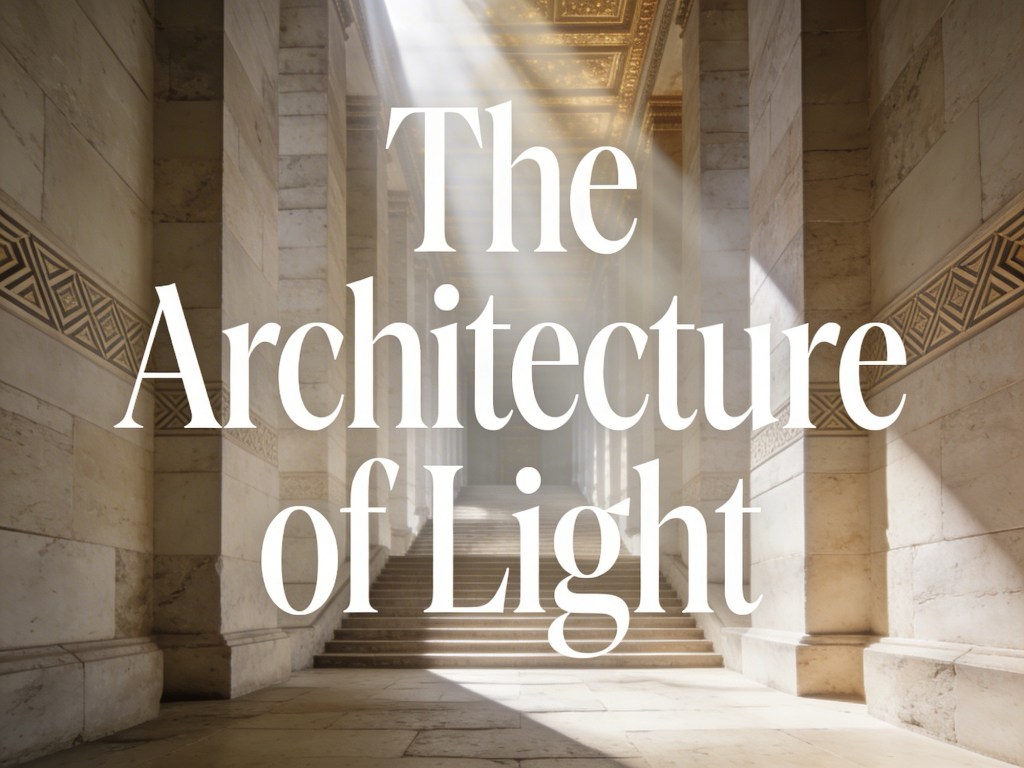
If the first post traced the architecture of darkness, this one turns toward the architecture of light—the quiet, stubborn work of refusing to live as if their world is the only world available.
⸻
Seeing the spell through Tablet VI
Tablet VI speaks of veiled ones, of forms that appear as men yet devour like something older and colder. It speaks of forces that bind the mind, of eyes that no longer see the Light that surrounds them. Underneath the imagery is a simple truth: darkness does not always come as horror. It often comes as distortion.
Distortion works like this. Power begins to look like goodness. Charisma passes for truth. Domination feels like strength. Protection gets promised in exchange for obedience. In Epstein’s circles, that distortion allowed predation to pass as rumor, excess, or private life. Around Trump, it allows cruelty and corruption to be rebranded as strength, authenticity, or “God’s choice.”
The first movement toward light is not virtue. It is sight. Tablet VI reads like a warning against spiritual myopia: when you forget what you are looking at, you become food for it. The spell starts breaking the moment language stops cooperating. When you call a lie a lie, a cult a cult, a predator a predator, something in the fog begins to thin.
Light begins with this refusal: I will not rename darkness to make it easier to bear.
⸻
Refusing to lay yourself on their altar
When Tablet VI describes blood sacrifice, it is easy to picture torches and stone and ritual blades. But beneath the imagery is a deeper pattern. Something living is given up so something dark can go on ruling.
With Epstein, the sacrifice was cruelly literal: bodies, futures, innocence.
Around Trump, the sacrifice slides inward. Conscience laid down for loyalty. Dignity surrendered for belonging. Reality itself bent until it fits the story the leader tells.
You can hear the altar being built in the standard lines:
- “Ignore that. Look at what he’s doing for us.”
- “If you really believed, you wouldn’t question this.”
- “Everyone lies. At least he lies for our side.”
Each bargain asks, softly at first, for something living in you to be placed on the stone. The tablets say plainly that those who trade with the Dark end up bound. There is no way to keep your hands clean while offering your conscience as payment.
Light refuses that trade. It would rather lose a tribe than lose the ability to tell the truth.
The crowd can call submission faith. You do not have to kneel with them.
⸻
Breaking the hunger of spectacle
Tablet VI talks about chains laid upon the mind and about men who are bound by the chains of the dark brothers. Not all chains clink. Some are made of attention.
Darkness, in the tablets, feeds on fear and ignorance. In this age, it also feeds on fixation. Outrage as ritual. Doomscrolling as daily offering. The name changes; the pattern does not.
The Epstein saga drew eyes through horror and voyeurism. The Trump era draws eyes through chaos, grievance, and the constant threat of something worse. It hardly matters whether the crowd worships or despises, so long as they stay enthralled.
To move toward light is not to look away from reality. It is to break the spell of constant spectacle. To step out of the trance that says your worth and your vigilance are measured by how often you refresh the feed.
Sometimes that looks simple: refusing to let one man’s tantrums dictate your nervous system. Limiting how much of your day belongs to his latest eruption. Choosing a deep book over a new scandal. Remembering that every moment you spend spinning in his orbit is a moment you are not building anything else.
The tablets tell you to turn your face toward the Light and hold it there. Attention is not a small thing. It is the gate of the temple. Whatever owns it begins to own you.
⸻
Taking back the words they stole
The Emerald Tablets honor law, balance, and the hidden flame in every soul. Tablet VI draws a line between those who serve that Light and those who turn downward, feeding on fear. In that world, language matters. Names matter. To name something falsely is to join yourself to its distortion.
That is part of why the current misuse of spiritual language lands so foully. Faith, chosen, anointed, God’s will—words meant to point toward something higher—are dragged onto stages and wrapped around appetite and domination.
Trump is presented to millions as a kind of vessel, a flawed but chosen instrument. Rage becomes righteousness. Revenge becomes justice. Loyalty to a man becomes loyalty to God. Tablet VI would call that what it is: a false light, feeding on those who mistake it for the real thing.
To move toward light here is to reclaim the words. To quietly decide that faith will never again mean blind submission to power. That anointed will not mean loudest man with a microphone. That God’s will will not be invoked to excuse cruelty.
You do not have to be religious to feel how obscene it is to dress a lie in sacred names. Some things should not be worn by a man like a costume.
⸻
From spectators of harm to keepers of memory
The tablets speak of sleepers and watchers. Those who drift and those who stand guard over the flame. The difference is not distance from darkness. It is what you do when you see it.
Epstein’s world thrived on silence and half-knowledge. People saw enough to know something was wrong and chose to treat it as gossip, rumor, or social currency. The Trump world thrives on a similar spectacle: people watching cruelty, authoritarian hints, and the stripping of dignity as if they were episodes in a show.
Light asks for something different. Not perfection, but witness.
Believing survivors instead of turning their stories into entertainment. Listening to people who live under the policies you only debate. Supporting the slow, unglamorous work of investigation, documentation, and legal pushback. Refusing to share clips that dehumanize, no matter how satisfying they feel.
Darkness loves to turn people into props and symbols. Light insists they are more than that. Every time you refuse to flatten a human being into an object—friend, stranger, or enemy—you are moving in the opposite direction of sacrifice.
⸻
Guarding the inner temple
Tablet VI speaks of temples of darkness and temples of Light, but the deepest temple is not built of stone. It is built of attention, memory, and desire. It is built inside you.
The architecture of darkness wants your inner space to match the outer ruin. Fear as background music. Contempt as language. Outrage as fuel. Secret satisfaction when the other side suffers. Left unchecked, your inner life begins to take the shape of the very forces you hate.
Guarding the inner temple does not mean pretending to be pure. It means refusing to become a smaller version of the same thing.
That might look like noticing when your hatred feels addictive. Letting yourself grieve instead of converting everything immediately into rage. Refusing to repeat lies, even when they help your argument. Keeping a part of yourself that does not report to the daily news cycle.
The tablets describe sitting in silence, calling on Light, and waiting until something answers. Whether you hear that as mystical instruction or psychological wisdom, the point is the same: you cannot stay clear in a poisoned atmosphere without some practice of rinsing your own soul.
You cannot leave their architecture while building their floor plan inside your chest.
⸻
Choosing another kind of power
In the tablets, those who walk with Light do not seek power in the way the dark ones do. Their power comes from alignment with law and the inner flame. They are described as steady, radiant, unshaken—not as loud, brutal, or spectacular.
Here, that translates into a different way of holding power. The old pattern says power is the right to get away with whatever you can. The new pattern says power is what you are entrusted with because you will not abuse it.
Sometimes that difference appears in painfully small ways: telling the truth when a sharper exaggeration would go viral; admitting you misjudged a story when better information arrives; refusing to humiliate a political opponent for sport; supporting leaders who show restraint instead of rewarding those who perform fury.
It does not feel dramatic. It feels like limits. It feels like saying no to yourself. It feels like the opposite of everything you have been taught about what strong looks like.
But strength that needs victims is just another mask for hunger.
⸻
Raising the floor
Tablet VI describes men falling ever downward once they have tied themselves to the Dark. It does not sound sudden. It sounds like a slow forgetting of what is unacceptable.
We know what that looks like. Lines that once felt solid begin to blur. Language that would have shocked you a decade ago becomes normal background noise. Things you swore you would never tolerate become things you explain away for the sake of the bigger picture.
Light pushes back by raising the floor of what you will live beside.
Deciding what kinds of cruelty cannot be justified, no matter who inflicts them. Deciding what degree of lying disqualifies someone from your loyalty. Deciding what treatment of the vulnerable cannot be folded into policy or strategy. And then holding that line even when your own side brushes up against it.
Without that floor, you are always one bargain away from the next descent the tablets warn about.
⸻
Ascent as practice
The Emerald Tablets do not promise a world without darkness. They promise a path through it. They describe balance, law, and a long climb—step by step, ever upward—while shadows still move below.
In a world where Epstein could be protected for years and Trump can still be treated as if he were sent by God, ascent is not a mood. It is a set of choices made over and over again.
Refusing to worship any man. Refusing to trade conscience for tribe. Refusing to treat lies as a reasonable price for winning. Refusing to become numb to sacrifice. Refusing to surrender either outrage or mercy.
The architecture of darkness will keep existing. It will keep inviting you in. It will keep offering you roles in its stories—as spectator, as defender, as bystander, as devotee.
The architecture of light is quieter. It is built one choice at a time, often with no audience. Every act of clear seeing, every refusal to lay yourself on their altar, every reclamation of the sacred from their mouths, every gesture of solidarity, every hour spent guarding your own inner temple—that is a stone laid in another world.
The outer structures may stand for a while longer.
The inner structure does not have to wait.
⸻
Stay Curious.
⸻
Sources
- The Emerald Tablets of Thoth the Atlantean (attributed to Maurice Doreal), especially Tablet VI: “The Key of Magic”
- Emerald Tablet (Hermes Trismegistus), for historical background on Hermetic interpretations and alchemical symbolism
 A Curious Stack
Leave a comment