what it was
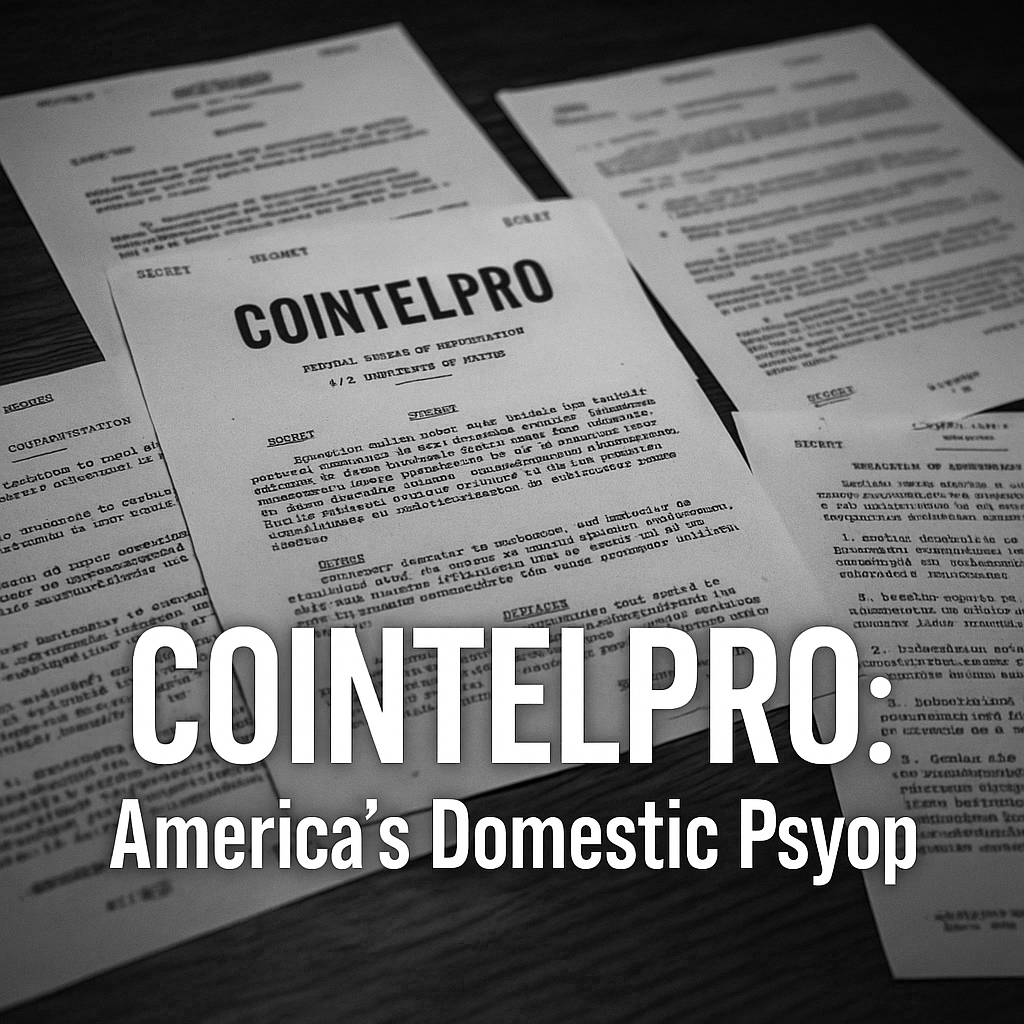
COINTELPRO — short for Counter Intelligence Program — wasn’t a conspiracy theory. It was the FBI’s own label for a covert initiative that ran from 1956 to 1971.
Officially, it was framed as protecting America from subversive threats. In practice, it was about neutralizing domestic political movements that challenged the status quo.
The targets weren’t foreign agents. They were Americans:
- Civil rights leaders like Martin Luther King Jr.
- Organizations such as the Southern Christian Leadership Conference, the Black Panthers, and the American Indian Movement.
- Anti–Vietnam War activists, student groups, feminists, Puerto Rican nationalists, even some liberal politicians.
The goal was not just to watch, but to infiltrate, discredit, and destroy.
⸻
the methods
COINTELPRO used tools that today we would clearly call psychological operations. Tactics included:
- Infiltration & provocation: Agents and informants joined organizations, sometimes escalating conflict or violence to justify crackdowns.
- Disinformation & forged letters: The FBI fabricated anonymous letters to sow distrust. Some were sent to spouses accusing leaders of affairs. Others stoked rivalries between groups.
- Media manipulation: Journalists were fed planted stories to smear activists as violent, unstable, or corrupt.
- Harassment: Anonymous phone calls, surprise audits, fake arrests, and relentless surveillance designed to break people down.
- Targeted blackmail: The most infamous example: FBI letters sent to MLK urging him to kill himself, accompanied by illicit surveillance recordings.
⸻
the impact
The fallout was devastating:
- Movements fractured. Suspicion corroded solidarity. Allies turned against each other.
- Leaders destroyed. Some suffered mental breakdowns, others were imprisoned, and some — like Black Panther leaders Fred Hampton and Mark Clark — were killed in raids planned with FBI involvement.
- Narratives reshaped. The public saw headlines portraying civil rights and antiwar groups as violent radicals, without realizing many of the ugliest stories were planted.
It worked. Organizing slowed. Communities shrank. The message was clear: dissent came with a cost.
⸻
how it was exposed
COINTELPRO wasn’t shut down by oversight. It was exposed by burglary.
On March 8, 1971, activists calling themselves the Citizens’ Commission to Investigate the FBI broke into an FBI office in Media, Pennsylvania. They stole documents and mailed them to reporters. One of the memos bore a cryptic heading: COINTELPRO.
The public uproar forced Congress to act. The Church Committee hearings in 1975–76 confirmed the scope of abuses. New guidelines were issued for surveillance and intelligence.
But the accountability was paper-thin:
- No senior FBI official went to prison.
- No deep structural reforms dismantled the playbook.
- The Bureau rebranded, promised restraint — but kept the tools.
⸻
why it matters now
COINTELPRO is more than a closed chapter in history. It’s a warning about how power operates when left unchecked.
The pattern is always the same:
- Infiltrate movements.
- Spread disinformation.
- Frame dissent as dangerous.
- Justify crackdowns in the name of security.
Those fingerprints show up again and again, from the war on terror to today’s digital psyops. If you know the old playbook, you can spot the echoes in the headlines now.
⸻
Stay curious.
⸻
** Stay tuned for Part II — where we examine how the tactics of COINTELPRO reverberate in the present, from the assassination of Charlie Kirk to the contested evidence against Tyler Robinson. **
⸻
 A Curious Stack
Leave a comment