the speech that set it in motion
In April 1953, CIA Director Allen Dulles stood at Princeton and told his audience that the Cold War would be fought not just with nuclear arsenals or armies, but in the fragile terrain of the human mind. It wasn’t a passing remark. Days later, he authorized what would become MKUltra, the CIA’s most infamous program of psychological experimentation.
The Agency had already run earlier projects, with code names like BLUEBIRD and ARTICHOKE, probing hypnosis and crude drug experiments. MKUltra was different. It was bigger, better funded, and blessed with extraordinary secrecy. It was also handed to Sidney Gottlieb, a man who blended the curiosity of a scientist with the ruthlessness of an intelligence officer.
⸻
laboratories without consent
Under Gottlieb, MKUltra spread like a spiderweb. Universities, hospitals, and prisons became unwilling laboratories. The Human Ecology Fund, a CIA front, laundered money into research grants, hiding the Agency’s hand.
Subjects rarely gave meaningful consent. College students signed up for what they thought were creativity experiments. Prisoners were promised lighter sentences for tests they didn’t understand. Psychiatric patients were subjected to treatments designed to erase their personalities.
The most notorious experiments took place in Montreal. Dr. Ewen Cameron, one of the most respected psychiatrists in the world, accepted CIA funding and pioneered what he called “psychic driving.” Patients were drugged into weeks-long comas, blasted with endless loops of taped suggestions, and jolted with massive electroshock sessions. Survivors emerged shattered. Some could no longer recognize their families. Others lost the ability to speak fluently or remember their own names.
⸻
midnight climax

In San Francisco and New York, the CIA staged an even stranger theater under the banner of Operation Midnight Climax. Apartments were set up as brothels. Sex workers on the payroll lured men inside, and their drinks were dosed with LSD. The men never tasted it, because LSD is colorless and odorless. Behind two-way mirrors, CIA operatives watched and filmed, studying how the drug unraveled perception.
These weren’t scientific experiments in any traditional sense. They were rehearsals in control, testing how people behaved when their awareness was compromised and their environment manipulated.
⸻
casualties
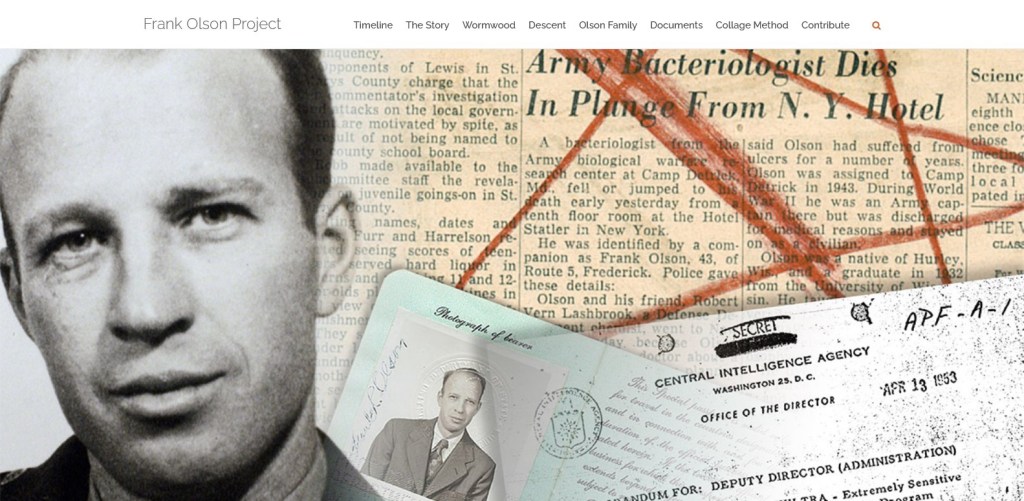
The costs were real. Frank Olson, an Army scientist working with the CIA, was secretly given LSD at a retreat in November 1953. Within days, he spiraled into paranoia. He confided doubts about his work in biological warfare. A week later, he plunged from a hotel window in New York. The CIA called it suicide. His son, Eric Olson, believes to this day that his father was murdered to keep him silent. Forensic evidence later raised serious questions about the official story.
In Canada, families of Cameron’s patients pursued lawsuits decades later. Testimony described relatives who went into the Allan Memorial Institute seeking treatment for minor issues and came out with obliterated memories. One woman recalled her mother returning home “as if her personality had been burned away.”
⸻
erasure and exposure
By the early 1970s, MKUltra was dangerous not only for its victims but for the CIA itself. Director Richard Helms ordered the files destroyed in 1973. Most of the record disappeared in a single bureaucratic purge. By accident, about 20,000 financial documents survived in an archive.
Those scraps formed the backbone of the Senate’s Church Committee hearings in 1975. For the first time, the public learned of LSD dosing, front organizations, and medical experiments without consent. The revelations were enough to shock, but not enough to reveal the full scope. With most files gone, the damage could never be fully mapped.
The Agency assured Congress the program was finished. The name MKUltra disappeared. But names can be buried while missions survive.
⸻
from syringes to screens
The Cold War program relied on chemistry: LSD slipped into drinks, injections given in secret, drugs used to dissolve resistance. But LSD was messy and unpredictable. By the twenty-first century, new tools emerged that could steer minds without the volatility of hallucinogens.
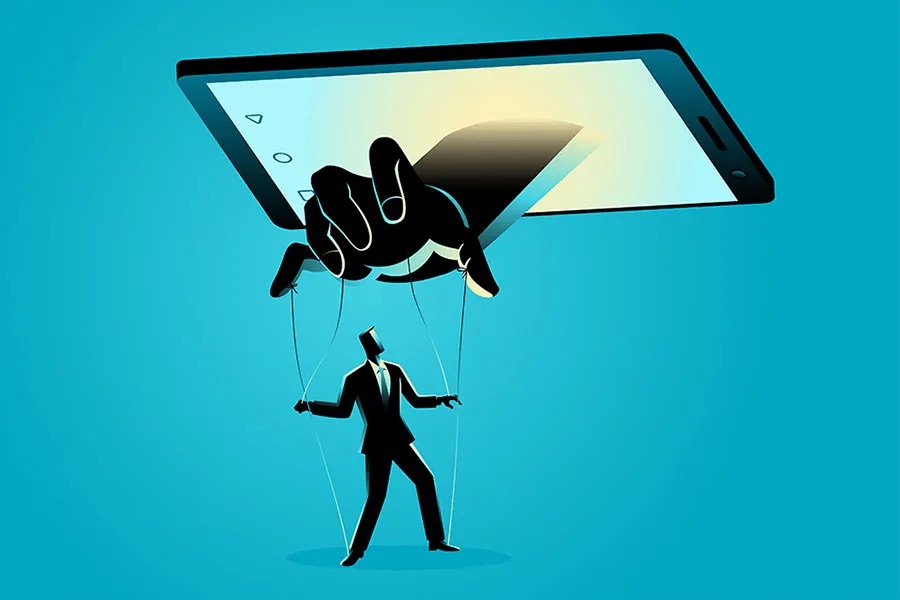
Algorithms became the new instruments of influence. In 2014, Facebook quietly manipulated the feeds of hundreds of thousands of users to test whether moods could be shifted by what they saw. The results showed that emotions could be nudged invisibly. YouTube’s recommendation system began driving viewers toward more extreme material, creating cycles of radicalization. TikTok’s finely tuned feed learned how to hold teenagers in loops of rage, despair, or obsession for hours.
What LSD did in a single night, algorithms could do every day, at scale.
⸻
the nudging state
Governments didn’t abandon the old dream of control. They refined it. Britain built a Behavioural Insights Team, popularly called the Nudge Unit, to reframe choices without people noticing. During the pandemic, health alerts and compliance apps were rolled out as public safety tools but doubled as live experiments in obedience. Political campaigns moved beyond television ads to microtargeting voters directly in their feeds, tailoring propaganda to the fears and desires of each individual.
This wasn’t mind control in the sci-fi sense, but it carried the same principle MKUltra chased: guiding behavior beneath the threshold of awareness.
⸻
continuity
Follow the thread: BLUEBIRD and ARTICHOKE asked whether a person could be bent against his will. MKUltra tried to achieve it with trauma and LSD. Exposure in the 1970s offered closure without accountability. DARPA’s “Total Information Awareness” and “cognitive security” programs reframed the mission for the information age. And today, Silicon Valley’s platforms perform psychological experiments on billions, monetized through advertising and quietly intertwined with state interests.
The language shifted, the tools evolved, but the line of continuity is clear.
⸻
the lesson
MKUltra is usually remembered as a scandal of the past, a warning about what can happen when secrecy collides with fear. That’s the comfortable version of the story. The harder truth is that it never ended. It migrated into new institutions, new technologies, and new justifications.
The CIA’s safehouses and secret labs are gone, but their logic survives in corporate offices where engineers adjust algorithms and in government agencies that test digital compliance at scale. The experiment no longer requires a syringe. It requires only a screen that you carry everywhere you go.
⸻
Stay curious.
⸻
sources
- CIA Reading Room — MKUltra Declassified Documents https://www.cia.gov/readingroom/collection/mkultra
- National Security Archive — Project ARTICHOKE files https://nsarchive.gwu.edu/briefing-book/intelligence/2017-06-25/artichoke
- Senate Select Committee on Intelligence — Church Committee Reports (1975) https://www.intelligence.senate.gov/resources/intelligence-related-commissions
- Stephen Kinzer — Poisoner in Chief: Sidney Gottlieb and the CIA Search for Mind Control (2019)
- The Guardian — Facebook experiments on users’ emotions (2014) https://www.theguardian.com/technology/2014/jun/29/facebook-emotion-study
- Wired — YouTube algorithm and radicalization https://www.wired.com/story/youtube-algorithm-conspiracy-radicalization/
- Shoshana Zuboff — The Age of Surveillance Capitalism (2019)
 A Curious Stack
Leave a comment