
introduction: the cracked mirror
I came of age in the shadow of “Just Say No!” Nancy Reagan wagging her finger on TV, D.A.R.E. cops lecturing us about frying our brains, grainy PSAs with eggs sizzling in a frying pan: “This is your brain. This is your brain on drugs.” Fear porn disguised as public health.
So of course, in college, I touched them. LSD. Psilocybin. MDMA. Not to be wild, not to be cliché, but because I was restless, because my mind already felt like a cage, because I needed a way out — or maybe a way in.
The first trip cracked something open in me. The walls of the self I thought were unshakable started to shimmer and bend. It was terrifying, beautiful, and impossible to dismiss. For the first time, I realized my mind could be more than a trap; it could be a cathedral.
⸻
the science that came later
Back then, all of this lived underground. You didn’t tell your parents or your professors you were taking psychedelics to try to heal. You didn’t even admit you were trying to heal. Now, decades later, the very same molecules that were demonized are being marched into white-walled clinics with government approval, startup funding, and branded hashtags. The science is late to the party, but it’s confirming what the fringes of society already knew.
trauma and ptsd
MDMA-assisted therapy has helped combat veterans and survivors of assault finally revisit memories without being consumed by terror. A few supported sessions often do what years of standard therapy could not: unstick the trauma loop.
depression and the default mode network
Psilocybin studies show that the brain’s default mode network — the relentless ticker tape of self-criticism and despair — can be disrupted. People report that even a single guided journey lets them see themselves without the usual distortions, like finding the mute button on an internal monologue that’s been tormenting you for years.
addiction and release
Long before Western labs got involved, Indigenous traditions used ayahuasca, peyote, and iboga to help people break cycles of dependency. Now, clinical research is confirming the same thing: psychedelics can expose the roots of addiction in a way no 12-step pamphlet ever could.
the common thread
These substances soften the walls. They kickstart neuroplasticity, letting us wander back through forgotten corridors, redraw the maps of memory, and reclaim the parts of ourselves that pain had locked away. For a moment, the cage door rattles.

And here’s the part no one in power has ever wanted us to notice: when you discover the bars of the cage aren’t as solid as they told you, the whole system starts to look fragile. A mind that can heal itself, a heart that remembers its own light—those are dangerous things in a society built on obedience and sedation. Label the compounds “illegal,” call them “bad,” terrify kids with frying eggs on TV… because if too many of us realized our own potential, the old machinery of control might not hold.
⸻
ritual, music, and the underground church
I never approached psychedelics as a party trick. For me they were ceremony, medicine, sometimes confrontation. I’d strip away distractions, close myself in a room, light a candle, and set an intention: show me what I need to understand my purpose in this life.
Music was always part of it. I’d put my library on shuffle, and the sequence would line up with eerie precision—songs sliding into the moment like they’d been waiting for me. A guitar line would spiral right into my chest, a lyric would answer the question I hadn’t yet asked. It felt like the universe was the DJ.
I’d go alone, because other people’s chatter pulled me out of the deep dive. When something came through that mattered, I’d write it down before it evaporated. Those notes became a map back to myself, a record of what I’d seen in the dark.
⸻
not a silver bullet, but a shovel
I’ve had beautiful trips, sure. The kind that leave you cracked wide open and laughing at the stars. But I’ve also had nights where every wound surfaced at once, and the cage felt like it was crushing me. Psychedelics aren’t gentle. They don’t hand you bliss.
What they hand you is a tool — a shovel to dig at the roots of the pain you’ve been burying for years. If you do the work, you can drag those roots into the light and finally see them for what they are. That doesn’t mean they disappear. It means they lose their grip.
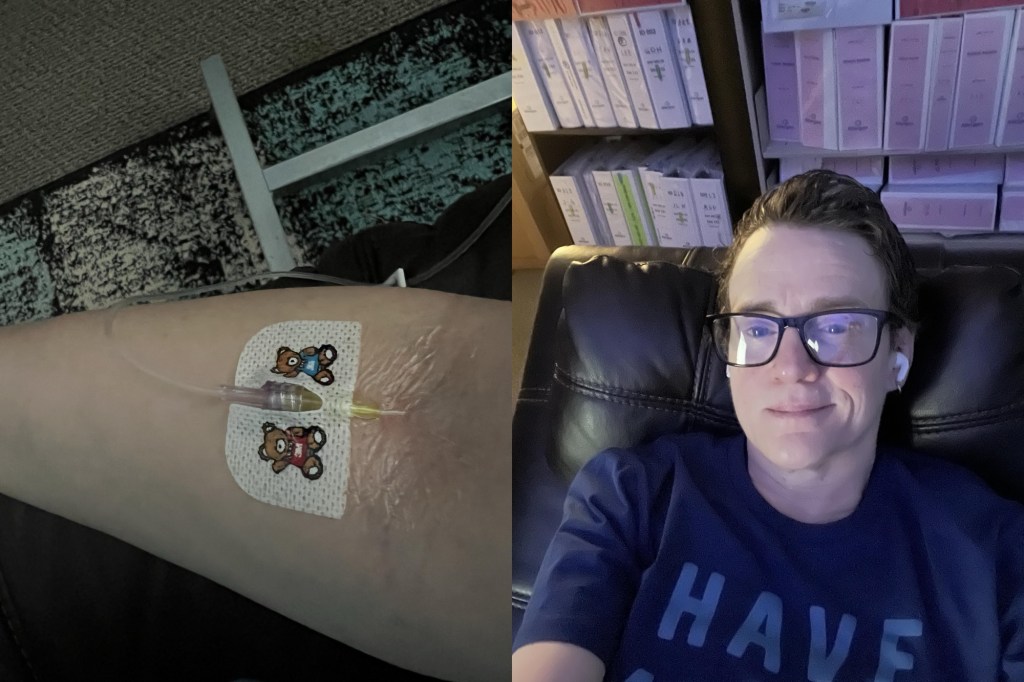
That’s why I keep returning, even now, currently through ketamine therapy. Sitting in a clinic chair with an IV in my arm, music carrying me out past the edges, I feel that shift. Depression and anxiety don’t vanish, but they stop being the only reality. The cage opens just enough for air to get in.
⸻
the danger of domesticated psychedelics
Here’s where the rage kicks in. The same government that branded psychedelics as poison is now cashing in on them. Venture capital funds are filing patents on psilocybin formulations. Wellness startups are charging thousands for clinical trips in sterile white rooms with designer playlists. The medicine is being commodified, repackaged, and sold back to us like it was their idea all along.
Meanwhile, the people who carried this knowledge through centuries of persecution — Mazatec healers, Shipibo shamans, Indigenous communities across the globe — are still sidelined, their traditions erased or appropriated. What was once ritual, song, and community is now being squeezed into a business model.
And here’s the deeper sting: the powers that outlawed psychedelics weren’t just afraid of kids getting high. They were afraid of people realizing their own sovereignty. Psychedelics can dissolve the story that we need their systems to survive. They can show us freedom is internal first, external second. You can see why that’s threatening to anyone invested in keeping the rest of us obedient.
⸻
a generational shift
As a Gen Xer, I remember when psychedelics were whispered about like contraband—passed in dorm rooms, shared on the dance floor at the bar, hidden in cassette cases. We were told they’d ruin us. Instead, for many of us, they opened the first crack in the wall.
Now, I scroll past glossy ads for mushroom retreats and watch CEOs talk about ayahuasca journeys on podcasts. It’s surreal. On one hand, I’m relieved: maybe this means fewer people will have to sneak around, risk jail, or live in shame just to find healing. On the other, it’s infuriating: the same culture that punished us is now selling the very substances it demonized. The underground has been raided, cleaned up, and franchised.
We were taught to fear our own minds. And now that they’ve found a way to monetize those same minds, suddenly it’s safe. That bait-and-switch is the most American thing I can think of.
⸻
closing: the light inside the cage
Every trip I’ve taken — from blotter acid in a dorm room to IV ketamine in a medical office — has carried the same core revelation: I am not broken. The noise in my head, the looping anxiety, the weight of trauma — those are real, but they aren’t the whole story. Beneath them is light. Beneath them is the capacity to love myself, and to love others, in a world that keeps trying to convince us otherwise.
Maybe that’s the real reason psychedelics were criminalized for so long. Not because they’re inherently destructive, but because they remind us of something systems of control would rather we forget: cages are only cages if you never touch the bars. Once you do, you feel them shift. And once you’ve felt them move, you’ll never again believe they were unbreakable.
Healing, like freedom, isn’t given to us. It’s something we have to fight for, dig for, and claim back. Psychedelics don’t do the work for you. They just show you the door. Stepping through—that’s on us.
⸻
Stay curious.
⸻
further reading
Clinical & Scientific Research
- MAPS: MDMA-Assisted Therapy for PTSD — Multidisciplinary Association for Psychedelic Studies overview of decades-long clinical trials.
- Johns Hopkins Center for Psychedelic and Consciousness Research — Ongoing studies on psilocybin for depression, addiction, and end-of-life anxiety.
- Imperial College London – Psychedelic Research Centre — Key psilocybin and fMRI studies showing how psychedelics quiet the brain’s default mode network.
Books & Deep Dives
- How to Change Your Mind by Michael Pollan — A journalist’s journey through psychedelic history, therapy, and neuroscience.
- Psychedelic Medicine by Richard Louis Miller — Interviews with researchers, therapists, and shamans about healing applications.
- The Cosmic Serpent by Jeremy Narby — Exploration of ayahuasca, Indigenous knowledge, and the hidden intelligence of nature.
- Acid Dreams: The Complete Social History of LSD by Martin A. Lee and Bruce Shlain — A deep dive into the politics, culture, and CIA experiments that shaped the story of LSD.
- DMT: The Spirit Molecule by Rick Strassman — Groundbreaking research into dimethyltryptamine and its role in consciousness, healing, and mystical experience.
- Food of the Gods: The Search for the Original Tree of Knowledge by Terence McKenna — McKenna’s exploration of the deep ties between psychoactive plants, human evolution, culture, and the sacred.
Cultural & Critical Perspectives
- Chacruna Institute — Essays and resources centering Indigenous voices and cultural context around psychedelic use.
- DoubleBlind Magazine — Journalism, guides, and stories on psychedelics at the intersection of culture, science, and spirituality.
- Erowid Experience Vaults — Decades of user-submitted trip reports, documenting the wide spectrum of psychedelic use.
 A Curious Stack
Leave a comment