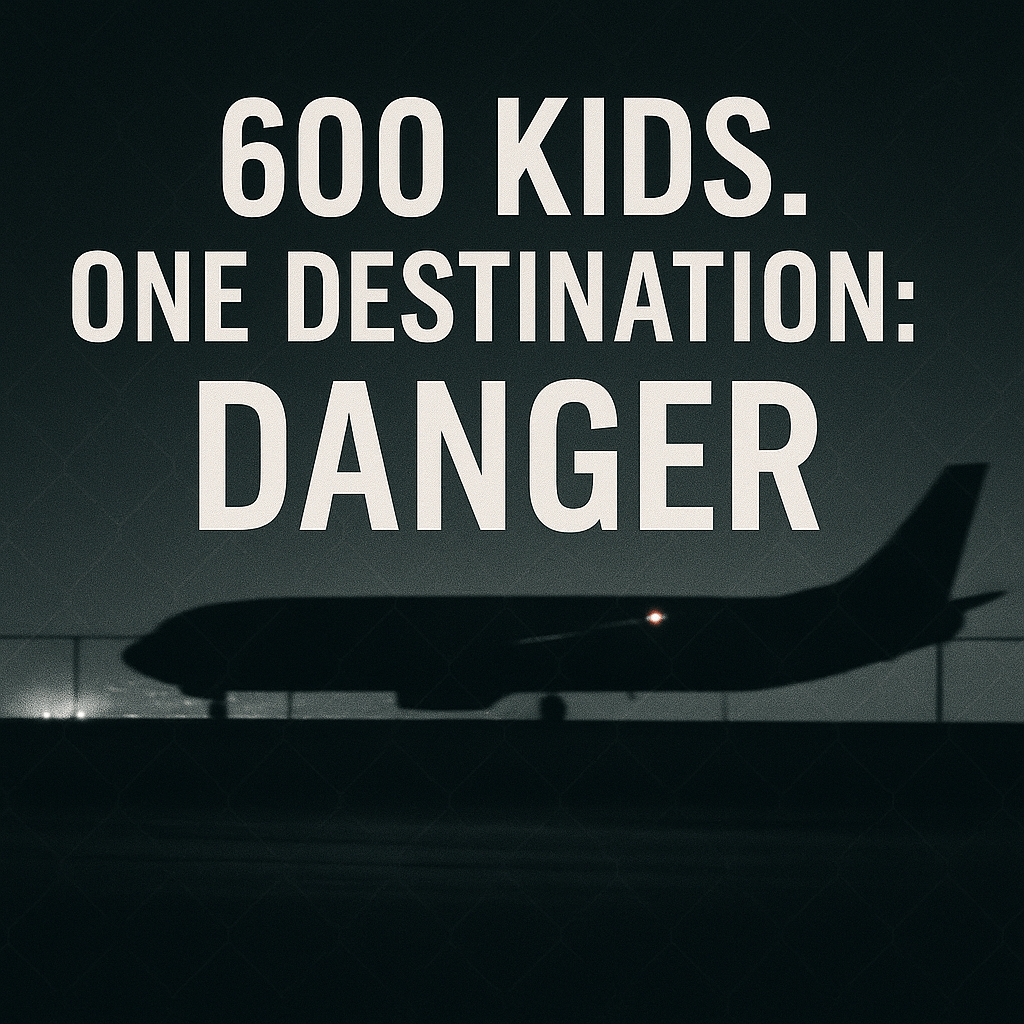
In late August 2025, U.S. officials attempted to board 600 unaccompanied minors onto flights bound for Guatemala. It was described in the clinical jargon of immigration enforcement as “voluntary return” and “repatriation,” but for the children themselves it was something else entirely: forced removal without hearings, without protections, and without any meaningful safeguard of their rights.
The plan collapsed in real time when federal courts intervened. By August 31, U.S. District Judge Sparkle L. Sooknanan issued an emergency restraining order, halting the deportations for at least two weeks. Some flights had already left runways; reports suggest children were pulled off midair or rerouted before crossing into Central America. But the images—the very fact that buses of kids were driven to tarmacs—remain an indelible reminder of how fragile legal protections become when policy turns into spectacle.
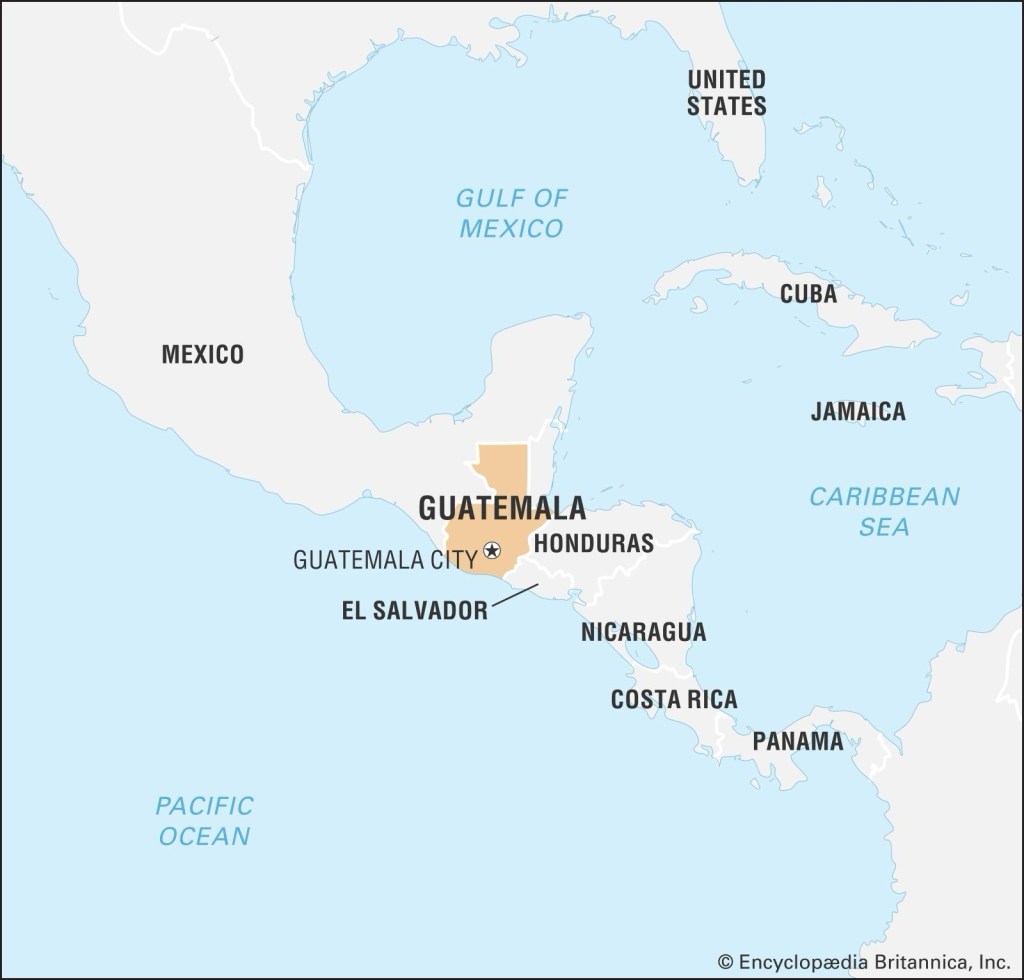
And beyond the procedural outrage lies a deeper question: why Guatemala?
⸻
Deporting Children to a Known Trafficking Hub
Guatemala’s reputation when it comes to child safety is grim, and not because of isolated incidents—it is systemic, well-documented, and ongoing. The attempt to mass-deport children there ignores decades of evidence that the country remains one of the most dangerous places in the hemisphere for minors at risk of trafficking.
⸻
Scale of Exploitation
According to UNICEF and Guatemala’s own anti-impunity commission (CICIG), roughly 60 percent of the country’s 50,000 identified trafficking victims are children. The trade is not small-scale—it is industrialized, generating an estimated $1.6 billion annually, nearly three percent of Guatemala’s GDP. That makes trafficking one of the largest illicit industries in the nation, rivaling narcotics.
The victims are not only teenagers. Reports document children as young as eight years old being trafficked for sex tourism and pornography. Recruiters approach families with false promises of work or education, only to funnel children into brothels, hotels, or clandestine operations.
⸻
Forced Labor and Street Exploitation
Exploitation isn’t confined to sexual violence. Children are also trafficked into forced labor, compelled to work in agriculture, domestic service, and street vending. In Guatemala City, minors are forced to beg or perform for money, their daily take funneled back to handlers who operate with impunity. U.S. State Department reports detail how these practices often involve criminal networks working hand in hand with corrupt local officials.
⸻
The Orphanage Fire and State Negligence
In 2017, the tragedy at the Hogar Seguro Virgen de la Asunción orphanage revealed just how unsafe state-run institutions could be. Forty-one girls, aged fourteen to seventeen, burned to death after being locked inside a room as punishment. Survivors later testified about years of sexual abuse, forced prostitution, and trafficking linked to the very institution meant to protect them. It was not a rogue scandal—it was symptomatic of a broken system.
⸻
Child Laundering Through Adoption
For decades, Guatemala was the epicenter of illegal international adoption. Between 1999 and 2011, nearly 30,000 children were sent abroad, many under fraudulent circumstances. Doctors, lawyers, and midwives colluded in a pipeline that involved forged paperwork, coerced maternal consent, and in some cases outright kidnapping. The practice was so notorious that Guatemala was forced to join the Hague Convention in 2007, effectively shutting down the trade. But the legacy remains: thousands of Guatemalan children lost to fraudulent “adoptions,” their families never reunited.
⸻
Sectarian Exploitation
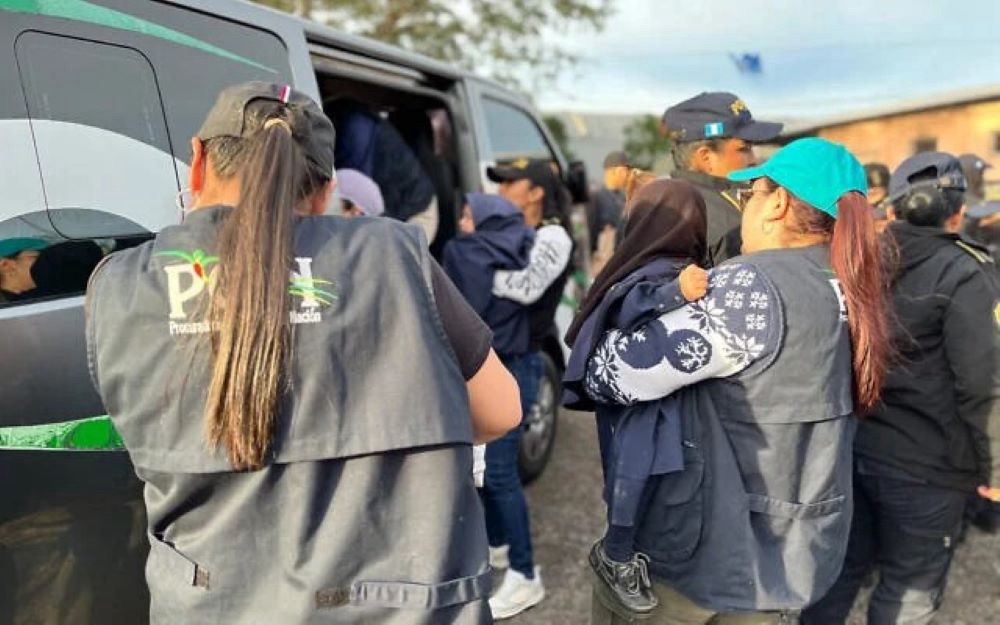
As recently as December 2024, Guatemalan authorities raided the compound of the Lev Tahor sect, a religious cult with a long history of abuse allegations. They rescued 160 children and adolescents, many of whom had been subjected to forced marriages, sexual assault, and coercive control. The raid underscored that Guatemala is still a haven for organized exploitation.
⸻
Child Sex Tourism
Guatemala’s proximity to North America and its entrenched corruption make it a magnet for child sex tourism. NGOs like ECPAT report that children between the ages of eight and fourteen are sold to foreign visitors for the equivalent of $100–$200. The trade is fueled by organized crime and enabled by weak enforcement. In some cases, law enforcement officers themselves have been implicated in protecting traffickers.
⸻
Indigenous and Rural Vulnerability
The most vulnerable are Guatemala’s indigenous and rural children. Families living in poverty often lack legal documents for their children, making them invisible to the state and easy prey for traffickers. The lack of birth registration, combined with systemic racism and economic desperation, creates a pool of unprotected minors that organized networks exploit with little risk of prosecution.
⸻
Why the Flights Were Stopped
The Flores Settlement Agreement was designed precisely to prevent mass deportations like this. It requires that children in U.S. custody receive individual hearings, humane treatment, and assessments of whether returning them would put them at risk. The Trafficking Victims Protection Reauthorization Act also mandates that unaccompanied minors cannot be rapidly expelled without safeguards against potential trafficking.
When the administration attempted to deport 600 children en masse, it bypassed these protections. Lawyers filed emergency motions, arguing that the flights were unconstitutional and illegal under both domestic and international law. The federal court agreed—at least temporarily. But the fact remains that the machinery was in motion, and it could restart unless checked by lasting injunctions.
⸻
The Larger Collision
What we’re left with is an ethical contradiction of staggering proportions. Children—some of whom fled gang violence, abuse, or poverty—were rounded up and nearly deported to a country with one of the highest child trafficking rates in the Western Hemisphere. The legal safeguards designed to prevent such harm were treated like obstacles, not obligations.
The image of 600 children on a plane to Guatemala should never fade into the background of immigration headlines. It encapsulates how easily human rights can be suspended in the name of expediency, and how vulnerable populations become bargaining chips in geopolitical maneuvers.
This wasn’t a logistical misstep. It involved a collision of law, morality, and power—one that nearly ended with hundreds of children deposited into a system already notorious for exploiting them.
⸻
Stay curious.
⸻
Sources
Judge orders administration to halt deportation of hundreds of Guatemalan children – Washington Post
Guatemalan document undercuts U.S. claims on child deportations – Reuters
Guatemalan authorities rescue 160 children from Jewish Lev Tahor sect – Reuters
2017 Guatemala orphanage fire – Wikipedia
Child laundering in Guatemala – Wikipedia
Human trafficking in Guatemala – Wikipedia
10 Facts About Human Trafficking in Guatemala – The Borgen Project
Guatemala country profile – Humanium
Trafficking in Persons Report: Guatemala – U.S. Department of State
 A Curious Stack
Leave a comment