part III: the machinery of obedience

introduction
The modern state doesn’t need jackboots at your door to control you. It doesn’t need barbed wire or midnight knock raids in the same way authoritarian regimes of the past relied on raw force. The 21st century has produced something far more efficient: digital architecture designed to track, predict, and direct human behavior. This is the new machinery of obedience, built not through tanks in the street but through algorithms, contracts, and dependencies.
Technocracy has always sold itself as pragmatic — power exercised by “experts” in the name of efficiency. But efficiency in governance means efficiency in control. Part III of this series examines how the infrastructure of surveillance, finance, and social management is being woven together into a system where freedom is redefined as compliance with the machine.
⸻
the logic of control
Technocracy thrives on measurement. Every click, transaction, movement, and conversation can be turned into data. And once data exists, it can be categorized, analyzed, and ultimately weaponized. This is no longer speculation — it is happening across multiple sectors:
- Predictive policing platforms using AI-driven models to “forecast” crime hotspots, disproportionately targeting marginalized communities
- Algorithmic management in the workplace, where warehouse workers, delivery drivers, and gig contractors are monitored and directed by software, not supervisors.
- Financial surveillance through cashless payment systems and centralized banking frameworks, where every purchase becomes a signal in your behavioral profile.
This is the logic of control: if everything can be measured, everything can be managed. And if everything can be managed, nothing escapes the system.
⸻
pandemic as precedent
The COVID-19 pandemic revealed how quickly societies will adopt mass compliance measures when framed as a matter of safety. Digital contact tracing apps, health pass systems, and restrictions tied to QR codes normalized a level of technological control that would have been politically impossible a decade earlier.
While the emergency may have passed, the precedent remains. Governments and corporations discovered that large populations could be trained to accept algorithmic gatekeepers for travel, work, and even social life. The infrastructure built in crisis does not vanish; it is repurposed for other forms of management.
⸻
from convenience to dependency
One of the most effective tools of technocratic power is not coercion but convenience.
- Digital IDs are pitched as secure and fast ways to prove identity — yet they also centralize control of your access to services.
- Smart city infrastructure promises efficiency in transportation and energy use — yet it requires continuous monitoring of residents.
- Subscription-based services and cloud platforms replace personal ownership with perpetual dependence on corporate networks.
What begins as convenience ends as dependency. And dependency is the foundation of obedience.
⸻
financial architecture of obedience
At the center of technocracy is the shift toward programmable finance. Central Bank Digital Currencies (CBDCs), already being piloted in dozens of countries, represent the next stage. Unlike cash, digital currency can be tracked, restricted, or programmed with conditions.
- A CBDC could prevent purchases outside of “approved” categories.
- Access to funds could be frozen for individuals flagged as “non-compliant.”
- Integration with digital ID systems could enforce political or social conformity as a condition of participation in the economy.
This is not speculative — the Bank for International Settlements has openly documented use cases for “programmable money.” What is framed as a tool for efficiency and fraud prevention doubles as a mechanism of social control.
⸻
freedom cities and the testbed society
The push for so-called “Freedom Cities” — walled-off zones of hyper-privatized infrastructure backed by billionaire investors — reveals the next stage of technocracy. These experimental cities are marketed as innovation hubs, but in practice they serve as laboratories for new governance models where democracy is bypassed in favor of corporate-managed rules.
Residents of such cities would be subject not to public law but to contractual frameworks enforced through digital monitoring. The city itself becomes a closed ecosystem, a controlled simulation where obedience to platform terms replaces civic participation.
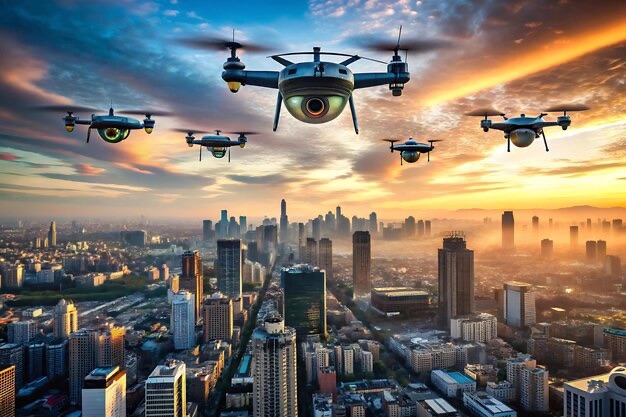
What is tested in the “Freedom City” can later be scaled to the wider society.
⸻
normalization through entertainment and culture
Control systems rarely arrive under the banner of control. They arrive disguised as progress, safety, or entertainment. Consider:
- Social credit mechanisms in China were first presented as tools for financial trustworthiness.
- Biometric surveillance in airports was introduced as a way to speed up boarding times.
- Algorithmic content feeds are presented as personalized entertainment, but they also regulate discourse and shape collective memory.
When obedience feels like entertainment, resistance becomes unthinkable.
⸻
conclusion: the threshold we stand on
Technocracy is not coming as a sudden rupture. It arrives gradually, through apps, contracts, and platforms we voluntarily embrace. The true danger lies not in the overt seizure of power, but in the silent replacement of autonomy with managed dependence.
By the time people realize their freedom has been conditioned into obedience, the machinery will already be in place. The question is not whether technocracy is possible — it is whether enough people recognize its mechanisms in time to resist.
stay curious. resist.
⸻
sources & further reading
- Bank for International Settlements – System Design and Interoperability for CBDCs
- Bank for International Settlements – Next-Generation Monetary and Financial Systems (2025 Report)
- ACLU – Lifting the Veil on the Design of Predictive Tools in the Criminal Legal System
- ACLU – AI Could Exacerbate Inequality, Experts Warn
- Wikipedia – Surveillance Issues in Smart Cities
 A Curious Stack
Leave a comment