part II: the infrastructure of control
⸻
The ideology covered in Part I doesn’t stay locked in essays or speeches. It migrates into code, contracts, and physical systems. Once it’s embedded in infrastructure, it stops being an idea and becomes the operating environment everyone lives under. That’s the stage we’re in now—wiring up the skeleton of a state that answers to investors before it answers to the public.
The real leverage comes from the networks that move information, track behavior, and control access. Data moves from personal devices into centralized repositories, then into private platforms owned by companies with government contracts. Decisions get made based on patterns generated by those platforms, often by people who will never meet the individuals they’re deciding on. In this setup, authority is relocated from public institutions into a chain of outsourced operators, each one further removed from democratic oversight.
⸻
freedom cities: corporate governance in municipal clothing
One example of this model in the wild is the push for “Freedom Cities”—privately managed municipalities designed to bypass the traditional framework of public governance. They’re marketed as innovation zones with streamlined regulations, rapid development, and “entrepreneur-friendly” policies. In practice, the levers of control belong to corporate boards and their legal teams, not to residents.

The basic public functions of a city—policing, zoning, infrastructure—shift into the hands of private contractors whose loyalty runs to shareholders. Disputes aren’t handled through public courts but through arbitration clauses buried in residency agreements. Local ordinances become enforceable terms of service. The elected council becomes an advisory body with no binding power.
Peter Thiel and his allies have spent years advancing the concept of startup cities and semi-sovereign jurisdictions. Freedom Cities carry the same DNA but are designed to integrate directly into existing national infrastructure. Once a city’s governance is privatized, undoing it is nearly impossible without dismantling the systems that run it.
⸻
private contractors as shadow government
When authority is distributed to contractors, government becomes a client rather than the top of the chain. The actual intelligence work, enforcement, and logistics take place inside companies that operate under secrecy provisions and proprietary technology shields.
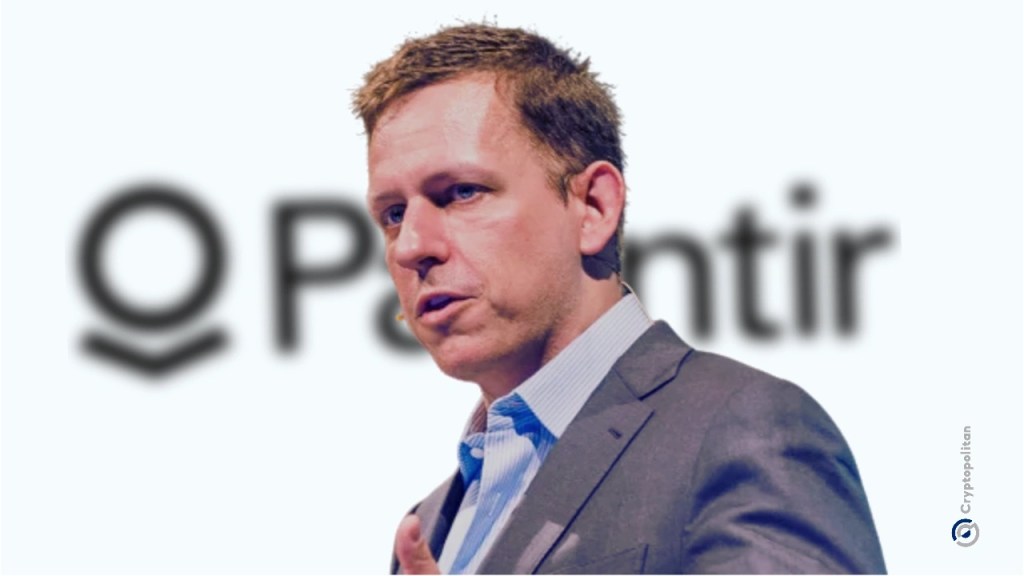
Palantir’s Gotham and Foundry platforms are prime examples. They pull in financial transactions, phone metadata, travel histories, criminal records, social media posts, and other datasets—then merge them into single profiles. Those profiles feed into models that assign risk levels and generate investigative leads. The process is invisible to the public and immune to outside audit. Once a platform like this becomes the backbone of agency operations, the code is as influential as legislation.
The structure erases the separation between public authority and private interest. Agencies depend on systems they don’t own and can’t maintain without the vendor. The company, not the state, becomes the true gatekeeper.
⸻
project 2025: clearing the field

While infrastructure shapes the day-to-day mechanics, Project 2025 aims to reconfigure the political landscape so the new systems face no resistance. The plan calls for removing thousands of career civil servants and replacing them with political appointees loyal to the executive. It also proposes dismantling independent oversight bodies that could challenge or slow down executive directives.
Combine this personnel purge with predictive surveillance tools and the result is a tightly controlled feedback loop. Leadership sets objectives, data systems identify targets, and enforcement happens without any neutral review process. The architecture becomes self-reinforcing.
⸻
the expansion phase
Much of this network is already operational. Palantir holds contracts with the Department of Defense, the CDC, and the IRS. Predictive policing programs are running in major cities, with data flows extending into federal systems. ICE uses integrated platforms to plan raids based on algorithmic projections.
Every contract, platform integration, and pilot program strengthens the dependency. Public agencies adapt their operations to match the software’s structure, not the other way around. Dismantling those dependencies later would require rebuilding entire workflows from the ground up, which is rarely attempted once a system is embedded.
⸻
where the fight lives
The tools and structures described here aren’t coming—they’re here. What changes is the level of public awareness and the speed at which they’re scaled. The more these systems are normalized as everyday administrative tools, the easier it becomes to expand them into new areas of life.
The real fight is not only about resisting the political ideology that drives this transformation but also about refusing to let its infrastructure become the default operating system for civic life. Once the grid is built and accepted, removing it is harder than stopping it from expanding in the first place.
stay curious.
⸻
sources:
• Freedom Cities Proposal – Trump Campaign Remarks, March 2023
• Charter Cities Institute – Overview of Charter and Special Economic Zones
• Financial Times: Peter Thiel and the Vision of Sovereign Tech Cities
• Palantir Government Contract List – USASpending.gov
• The Intercept: Inside Palantir’s Secretive Work with ICE
• The Daily Beast: Palantir’s Role in Predictive Policing and ICE
• Heritage Foundation – Project 2025 Mandate for Leadership
• Axios: Trump Allies Plot Sweeping New Power for President
• Brennan Center for Justice: Project 2025 and the Threat to Civil Service
 A Curious Stack
Leave a comment