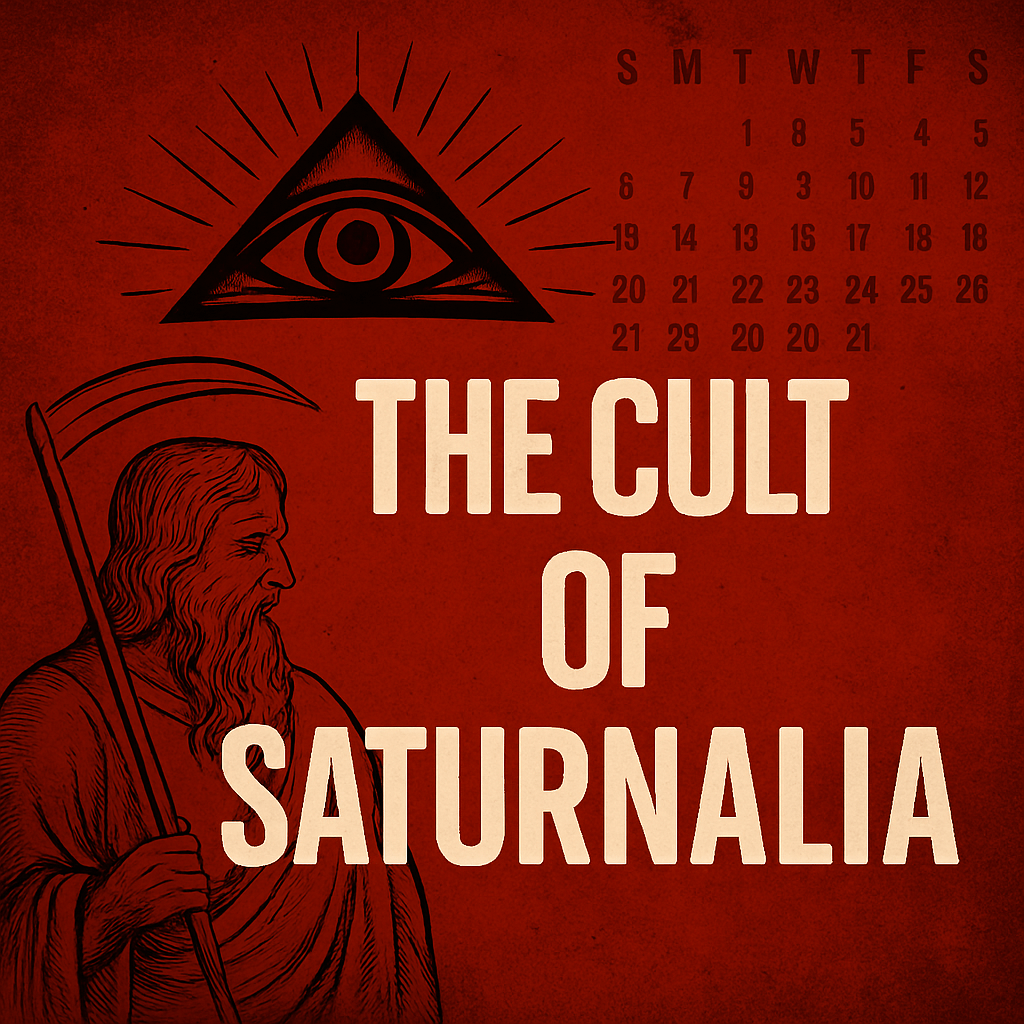
the calendar was always the interface
“The machines are not taking over. They’ve already taken over — by making us think we’re still in control.”
— Douglas Rushkoff
The calendar is not neutral. It never was. It’s not a passive record of time passing. It’s a weapon. A structure of control disguised as ritual, logic, or faith. The calendar is the original interface — a system of behavioral enforcement wrapped in tradition.
Rome ran this game before your apps ever did. Saturn, the god of time and order, wasn’t just mythological — he was infrastructural. The cult of Saturn was an operating system. And the Julian calendar was its UI.
You didn’t question the system because the system was baked into the seasons, into the rising and setting of stars. Obedience felt like nature. Order felt like gravity.
Saturnalia — that infamous winter feast of inversion — was a controlled burn. A simulation of disorder reinforcing the very order it appeared to mock. Like Black Friday after Thanksgiving. Like protest signs printed by Canva.
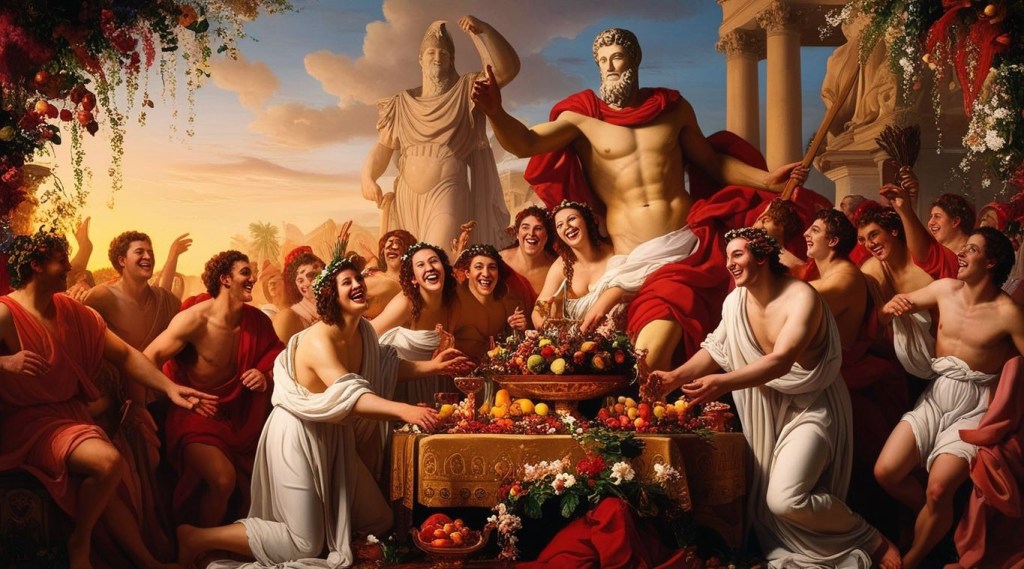
The Church didn’t destroy this idea but they rebranded it. Saturnalia became Christmas. The calendar stayed the same — only the icons changed.
Fast-forward: performance reviews every Q4. Product drops in sync. Holiday sales cycles built into your dopamine rhythms. You’re not scheduling your life. You’re confirming your placement in a machine.
Even dissent is calendared. You get Pride in June. Black history in February. Outrage slots. Performance periods. You don’t set the tempo. You dance to it.
We haven’t stopped worshiping Saturn. He just became events in our calendars.
⸻
the empire’s new feast: tech rituals and predictive inversion
The festival hasn’t ended but it transitioned into selling you things.
What was Saturnalia — ritualized chaos and sanctioned misrule — is now baked into the system. Scheduled, branded, monetized.
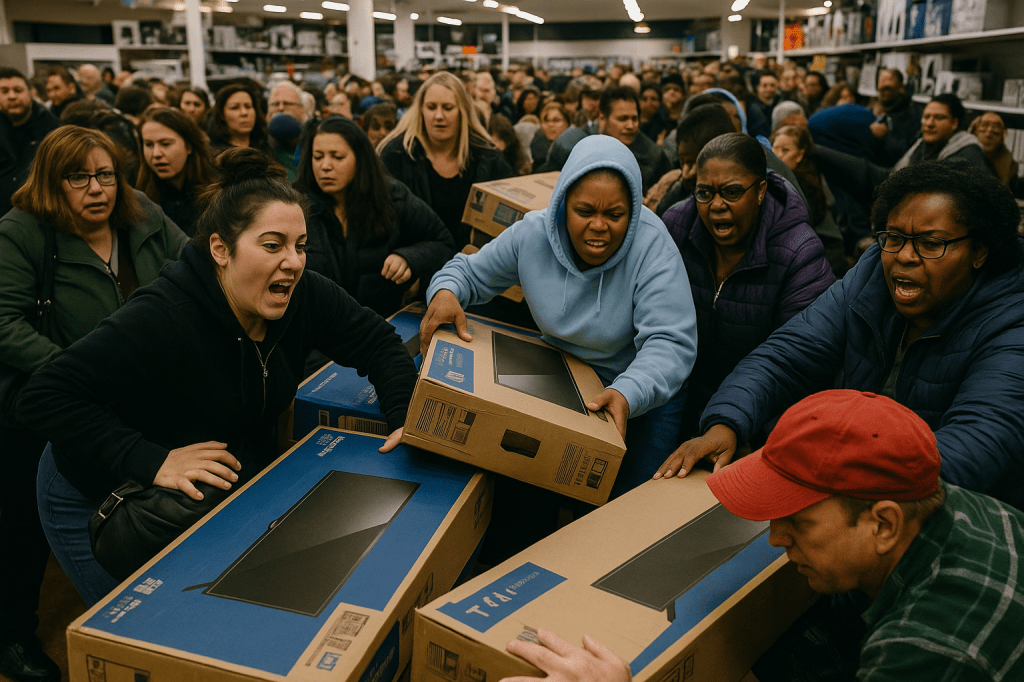
Black Friday? Modern Saturnalia. A day of performative madness, brawling over TVs, laughing while livestreaming the carnage. A ritual of sanctioned disorder. A purge disguised as discount.
TikTok trends. Meme spirals. Cancel culture. All ritualized inversion now. Aesthetic revolutions on demand. Brand “activism” with matching fonts.
Inversion is the product.
Rebellion becomes aesthetic. Rage becomes virality. Collapse becomes content.
And protest? Scripted. Hashtag-ready. Color-coded. Change reduced to brandable templates. Revolution with a merch table.
You’re performing in the festival of the modern empire. Every website or app scroll is a procession. Every dopamine loop a hymn.
The rules inverted permanently.
⸻
the cult became a franchise
No collapse. No fall from grace. The cult of Saturn still remains today.
The logic of Saturn — control through time, inversion as containment, obedience masked as celebration — got franchised. Licensed out. You don’t need a high priest when you’ve got a brand manager. You don’t need a temple when you’ve got Amazon Prime.
Amazon is a temple. Apple is a shrine. Meta is a church of digital memory. Microsoft is the priesthood of productivity.
You don’t chant. You tap. You don’t burn incense. You click. You don’t bring offerings. You are the offering — your time, your attention, your behavior.
And like any good cult, it rewards your obedience. Badges. Streaks. Leaderboards. Feedback loops. The empire now rules by UX (user experience).
The gods are now in the private sector. We placed Saturn in the cloud.
⸻
from blood sacrifice to click ritual
The sacrifice? It’s still being made but in a different form. You don’t have to bleed on an altar. You bleed on a social media feed.
You give up time. Attention. Memory. Autonomy. All offered — voluntarily — to a machine that’s smart enough to frame it as empowerment.
You sacrifice your location for convenience. Your privacy for “connection.” Your trauma for “engagement.” Your behavior becomes currency. Your fear becomes product.
The altar is invisible. But it’s always on.
The sacrifice is ambient now. Ritualized, soft-coded. No priest needed. Just WiFi.
Your identity becomes training data. Your memories become model input. The gods used to feed on smoke. Now they feed on you.
And what’s left when every memory is gamified, every gesture indexed, and every version of you commodified?
You don’t die on the altar anymore.
You live inside it.
A truth wrapped in UX and draped in code.
⸻
thiel’s machine: saturn in the age of predictive governance
Call it an oracle if you want to keep it pretty, but the core function is simpler and colder: remember everything, model everyone, and push decisions upstream so the choice is over before you even reach for it. That’s the architecture. Not a throne room with banners, but a mesh of contracts, APIs, data sharing agreements, and terminals glowing in rooms where nobody elected the people typing. Saturn gets an upgrade, loses the robes, keeps the scythe.
Palantir was built to swallow chaos and spit out certainty for whoever can afford it or mandate it. Gotham knits together the fragments—arrest records, license plates, payroll stubs, phone numbers, pathology reports, shipping manifests—and draws lines no human could justify in a courtroom without laughing; Foundry turns institutional plumbing into a governance layer so slick that “policy” starts to look like a dashboard setting; Apollo keeps it all alive in the wild so the machine never sleeps. The sales pitch is always the same: pattern recognition saves money, saves time, saves lives. And sometimes it does. The price isn’t obvious because it isn’t billed to a line item; it’s debited from the future, from the human messiness that keeps possibility open, from the right to do something unpredictable without being pre-flagged as risk.
If Palantir is the archive that learns, Anduril is the hand that moves. Lattice takes sensor feeds and turns a sky full of dots into a target stack, the kind of thing that makes generals feel like gods and junior officers feel like they’ve been replaced by a menu. Towers along borders hum quietly; swarms coordinate; interceptors make decisions faster than your nervous system. It all runs on the same moral math: preemption beats aftermath. In practice that means the machine wants to act before the event exists, which is a neat trick if you’re eliminating a missile in flight and a nasty habit if you’re talking about people, neighborhoods, movements, or moods.
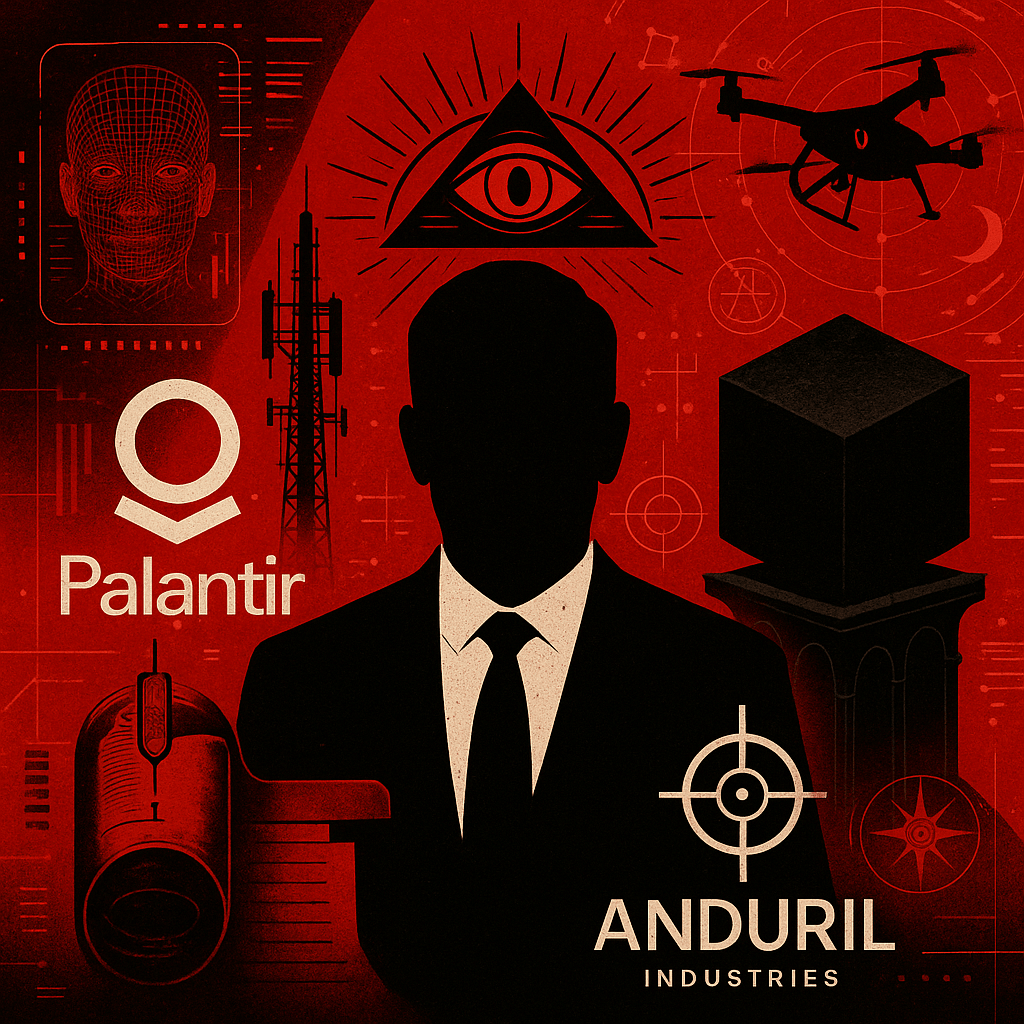
You don’t need a crown to steer a state when you provide the nervous system, and that’s the part nobody wants to say aloud because it sounds theatrical until you see a cabinet department log into a private platform to figure out “what’s real” today. The systems become the calendar—what gets attention, what gets budget, what hits the red zone, what becomes Tuesday’s emergency and Thursday’s memo. Predictive governance slides in under the door with a service contract and a training stipend, and by the time someone notices that the model assumptions are moral choices disguised as math, the workflow is dependent and the outputs are “mission critical.”
Project playbooks come and go under different names and logos, but the logic threads through them like steel wire: consolidate data, centralize decision rights, merge security with administration, harden borders, accelerate permissioning for surveillance, and put the “exceptions” process in the hands of software that never forgets a denial. It’s Saturn written in policy memos—time, order, rationing, discipline—except now the feast day never arrives because the inversion is already background noise in the consumer sphere, which lets the administrative sphere harden without anyone noticing the temperature change.
Here’s the part that keeps me up at night: once you build a system that can predict a person’s likely future by triangulating their past and context, the system starts to believe the forecast more than the person. The model becomes the truth-maker. Bail decisions, benefit approvals, border discretion, school placements, medical triage, protest permitting—nudge them all with “risk” and the world bends in the direction the model already preferred. Saturn devouring his children turns into a protocol where tomorrow is pre-eaten by the curve fit; your future shrinks to the most probable line.
And because the machine is efficient, people who sign checks and wear flags learn to trust it. It feels clean. It feels adult. It feels like finally we’ve modernized governance. But clean is a liar. Clean is what you call it when the blood moved offstage into the plumbing. We traded visible corruption for invisible optimization and called that progress, and if you listen closely you can hear the old priests laughing because nothing fundamental changed; the ritual just scaled and stopped asking permission.
If you want the human version, strip the logos off and say it plain. A small network of investors and strategists built companies that sell the state the illusion of omniscience and sell private giants the illusion of inevitability, then seat those tools between citizens and outcomes. Elections shuffle actors; the stack remains. Your mayor can bark about reform, your senator can grandstand about oversight, your agency head can promise “guardrails,” but as long as the dashboards write the tempo and the procurement culture worships speed, the scythe keeps circling.
People keep saying this is inevitable because the threats are real and the margins are thin and the world is messy. Fine. The world is messy. That’s why we’re supposed to be careful about turning prophecy into policy. The second you start governing by forecast instead of by principle, you’ve accepted a quiet doctrine that some people’s futures are expendable if the model says so. That’s Saturn’s doctrine with a slick UI.
“The problem with predictions is that they often shape the very future they claim to observe.”
— Ruha Benjamin
Thiel’s name ends up on the masthead because he had the nerve and the money and the appetite to push the thing through its awkward childhood and into power, threading venture discipline through war rooms and ministries, funding the men who like hard edges and the lawyers who write new edges when the old ones dull. Whether he’s in the room matters less than the fact that his machine is, and once the machine is inside the walls, the walls rearrange themselves around it.
This isn’t a villain speech and it isn’t a purity test. It’s a field note from inside the interface: the prediction layer is becoming the government layer, and the private oracle is writing the calendar. If you want to keep a future that isn’t pre-chewed, you have to challenge the assumptions baked into the models, drag the dials into daylight, refuse the lazy comfort of dashboards that tell you who people are before they even get a chance to be someone else.
Because the truth that gets lost under the metrics is the only one worth the risk: a free life looks wasteful to a machine. And once the machine sits at the center, waste becomes sin, sin becomes risk, and risk gets routed to the cutting floor.
⸻
the feast becomes the stack
The feast is still happening. You’re just not at the table. You’re on it.
Saturnalia didn’t vanish. It migrated — from the Roman calendar to the Gregorian, from the solstice bonfire to the checkout screen, from the priest’s chant to the push notification. The feast no longer erupts once a year in sanctioned misrule. It runs silently, permanently, like background code. Like firmware. Like ritual turned protocol.
The inversion has stabilized. Chaos became rhythm. Rebellion became UI. The rituals no longer mark time — they make it. The calendar isn’t something you look at anymore. It’s something that looks at you. Tracks you. Schedules you. Scores you. And when you’re out of sync, it doesn’t excommunicate you — it redirects you. Nudges you. Trains you.
You can still flip the script, sure. You can scream into the feed, log off for a week, start a substack and call it resistance. The machine doesn’t care. It accounted for that. It modeled it. Built the off-ramp just for you. You’ll either come back or become an object lesson in churn. That’s how the stack thinks — not in people, but in patterns. Not in error, but in probability.
The rituals persist because they work. The sacrifice persists because it’s voluntary now. The cult persists because it doesn’t need your belief. It only needs your behavior.
And you’re already inside it.
You don’t fast for Saturn. You track calories on an app that sells your cravings. You don’t bow to Kronos. You clock in under biometric surveillance, monitored by algorithms predicting burnout before you feel it. You don’t light a fire for Moloch. You post a selfie at golden hour while the air quality index climbs and no one does a damn thing because the trend is still peaking.
The stack is the feast now. Layered. Invisible. Efficient. Permanent.
Each layer automated the last:
– The ritual became the schedule
– The schedule became the interface
– The interface became the oracle
– The oracle became the law
Saturn went SaaS, and he still lives.
And you’ve been syncing your calendar to him ever since.
Stay curious.
“We have built systems we no longer understand, serving purposes we no longer control.”
— James Bridle, New Dark Age
COMING SOON
Empire of Memory: The Cult of Saturnalia Part III – Shadow Protocols and the Engineered Reckoning
The rituals are running. The stack is live.
Next, we trace the control systems you were never meant to see.
 A Curious Stack
Leave a comment